

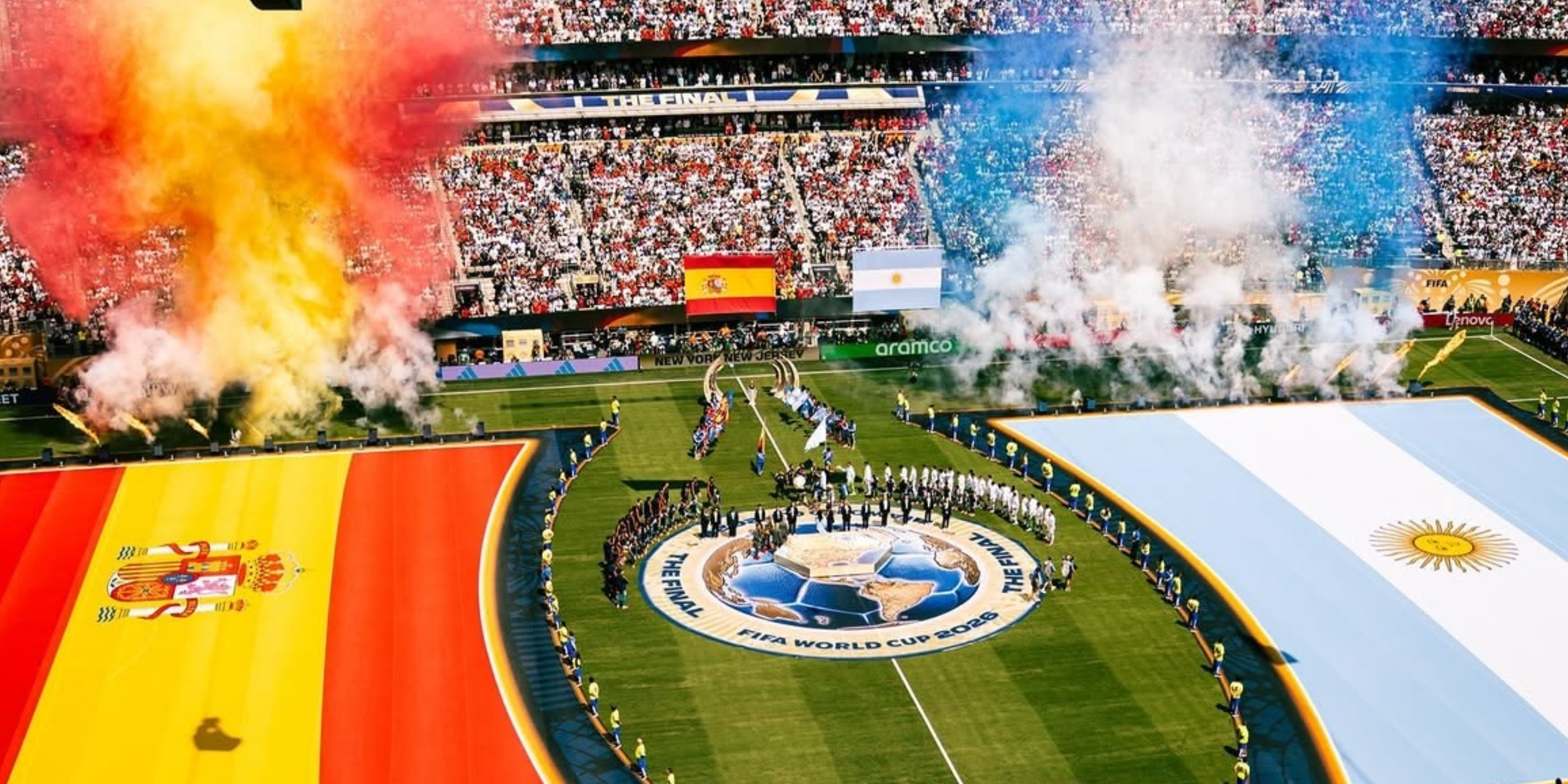
There was a moment on Wednesday night in Atlanta when it looked like Argentina's story was finally going to end the way everyone expected it to end eventually. Down 1-0 to England deep into the second half. The clock working against them. A talented, hungry English side that had controlled long stretches of the match and looked ready to finally break through to a first World Cup final in sixty years.
And then Lionel Messi decided the story was not finished yet.
In the 85th minute, Enzo Fernandez finally beat Jordan Pickford with a long-range strike that Messi's fingerprints were all over. Then, deep into stoppage time, Alexis Mac Allister rattled the post, Messi collected the loose ball, and delivered a cross so precise that Lautaro Martinez barely had to move his head. 2-1. Argentina survives again. Messi assisted both goals, on a night he did not score a single one, and walked off that field as the reason Argentina is playing in another final.
This was not new for this Argentina team. They needed extra time to survive Cape Verde. They clawed back from two goals down against Egypt. They needed extra time again against a shorthanded Switzerland side. Four straight knockout matches, four times staring at elimination, four times finding a way through. Their own coach put it plainly after the final whistle. This team plays its best when it is facing adversity. There was blood in the water, and they went for it.
I want you to sit with that phrase for a moment, because it is not really about football.
There is a version of wanting something that only shows up when conditions are comfortable. And there is another version, the kind Argentina has displayed all tournament, that shows up precisely when everything is falling apart. Scripture calls that second kind perseverance, and it never treats it as optional. "Let us run with endurance the race that is set before us, looking to Jesus, the founder and perfecter of our faith, who for the joy that was set before him endured the cross, despising the shame." Endurance was never meant for the easy stretches of the race. It was built for the moment the legs are burning and the finish line is nowhere in sight.
Messi is 39 years old. This tournament, by ordinary standards, should have been beyond him. Instead he sits atop the Golden Boot standings, tied for the tournament lead in goals and now ahead in assists, still the deciding factor in the biggest moments of the biggest matches. That is not simply talent aging gracefully. That is a man who has decided, one more time, that wanting it still matters more than anything his body or his age tries to tell him.
There is a name for that kind of hunger in scripture too. Paul, writing near the end of his own long race, said, "Not that I have already obtained this or am already perfect, but I press on to make it my own, because Christ Jesus has made me his own... I press on toward the goal for the prize of the upward call of God in Christ Jesus." Notice he did not say he had arrived. He said he was still pressing, still wanting it, long after most people would have called it enough.
Now turn to the other side of Sunday's final.
Spain did not need a miracle to get here. They dismantled France 2-0 on Tuesday, the same France side that reached the 2022 final, and did it with the kind of composed, suffocating control that has defined their entire tournament. While Argentina has been surviving on knife edges, Spain has been quietly, relentlessly dominant, a team built on discipline, structure, and a footballing identity so consistent it barely needs improvising.
That is its own kind of biblical principle, and it deserves just as much honor as Argentina's comebacks. "Whoever can be trusted with very little can also be trusted with much." Spain's dominance this tournament was not built in these four weeks. It was built over years of consistent identity, of a footballing culture that trusted its process even when it was not the most talked about team in the room. Paul told the Corinthians that "every athlete exercises self-control in all things," training with discipline for a prize that fades, when believers train for one that never will. Spain looks like a team that has spent years exercising exactly that kind of self-control.
So here is what Sunday actually gives us. Not simply Europe against South America. Not simply one continent's pride against another's. It gives us two different pictures of what it costs to become great, both of them true, both of them worth learning from.
Argentina shows us that wanting something desperately, refusing to let go of it even when the moment looks lost, still counts for everything. Spain shows us that quiet, disciplined excellence, sustained far longer than anyone is watching, eventually produces a team that cannot be shaken. Scripture holds room for both stories. The persistent widow who would not stop asking until the unjust judge finally gave her justice. And the wise steward who was faithful with a little, so he could be trusted with much.
Which one are you living out right now, in whatever race you are actually running? Are you in an Argentina season, where you cannot afford to let go, where the only way through is refusing to accept that the story is finished? Or are you in a Spain season, where the win will not come from a miracle but from staying disciplined and faithful to a process nobody is applauding yet?
Both are worthy. Both are biblical. And both, on Sunday, will be standing on the same pitch, chasing the exact same trophy.
I do not know yet who lifts it. Argentina is chasing something that has only happened once in the last seventy years, back-to-back titles, last achieved by Brazil in 1962. Spain is chasing only its second star, but arguably its most complete team in a generation. Whatever happens, do not let it just be entertainment to you. Let it be a mirror.
So tell me honestly. Whose story looks more like yours right now, Argentina's refusal to quit, or Spain's quiet, disciplined dominance? And more importantly, are you still pressing on toward what is in front of you?
Argentina vs Spain. One More Wanted It More Than Anyone Left On That Field. Here Is What the Final Is Really About.

Previous
Previous
The World Is Trading Strikes Between Iran and the United States. Here Is What the Church, and Every Leader Watching, Cannot Afford to Miss
Next
Next