
Training Your Children In The Way Of The Lord In A World Working Against You
The Assignment Was Never Optional
Every generation of parents believes it faces unique challenges, and in some ways every generation is right. But the core assignment given to parents has never changed since scripture first recorded it. "Train up a child in the way he should go; even when he is old he will not depart from it." That is not a suggestion tucked into a book of general wisdom. It is a promise attached to a command, and it places the responsibility for spiritual formation squarely where it has always belonged, inside the home, not outsourced to a school, a church program, or a screen.
What Training Actually Means
The Hebrew word behind train carries the sense of dedicating or setting something toward its intended purpose from the very beginning, the same word used for preparing a newborn to nurse. It is not a single conversation or a yearly church camp. It is a continuous, deliberate shaping of a child's heart, mind, and habits over the entire course of their upbringing.
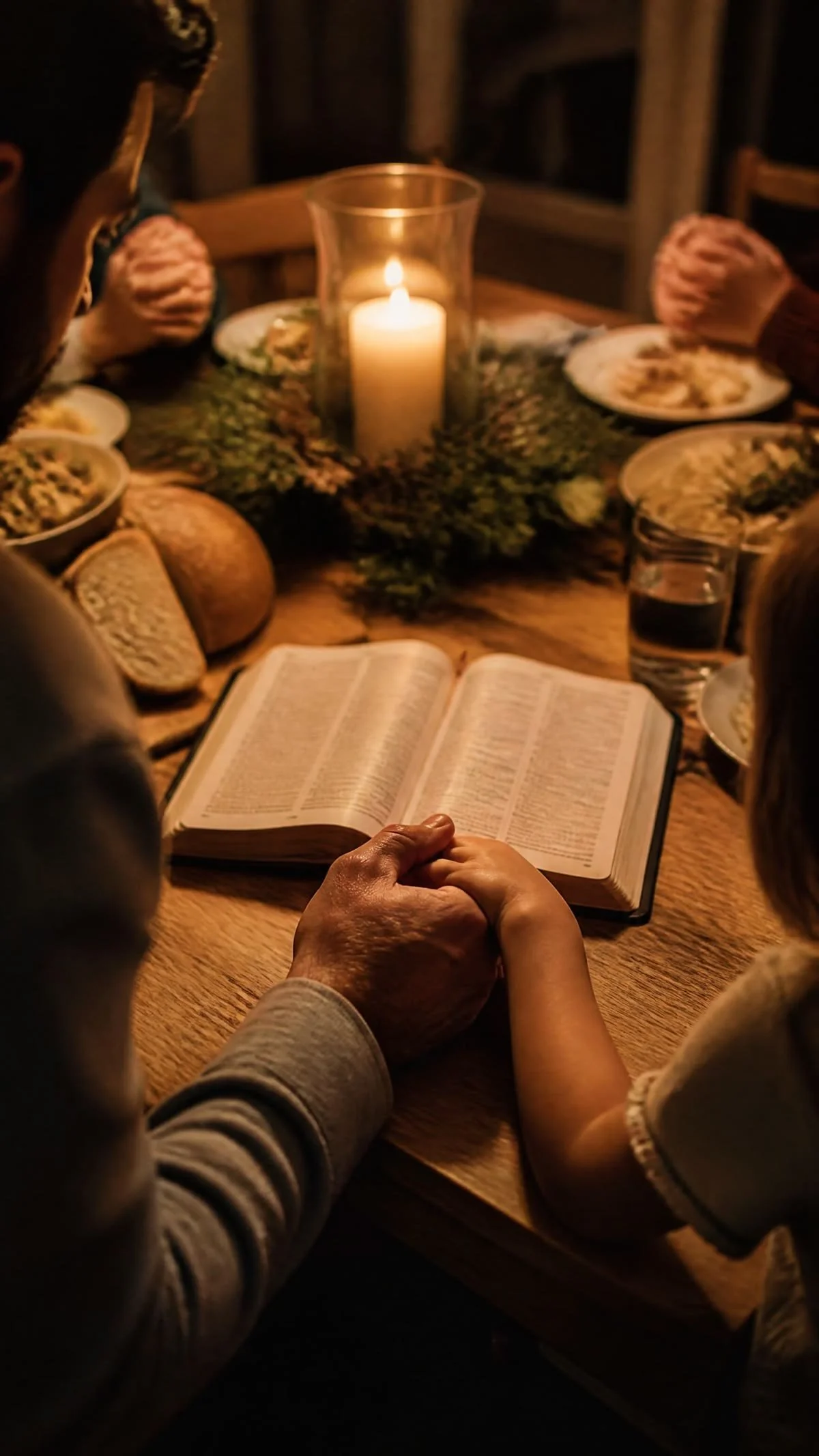
Moses described exactly what that continuous shaping looks like in practice. "You shall teach them diligently to your children, and shall talk of them when you sit in your house, and when you walk by the way, and when you lie down, and when you rise." Notice the settings named. Not only structured lesson time. Ordinary moments. Car rides. Dinner tables. Bedtime. Scripture was never meant to be confined to Sunday morning. It was meant to be woven into the fabric of daily conversation.
Why This Matters More In This Era, Not Less
Today's children are growing up immersed in more competing voices than any generation before them. Algorithms curate what they watch. Peers influence them constantly through platforms parents often cannot fully see. Entire value systems are being shaped by content designed specifically to capture attention, not to build character.
This is precisely why intentional, consistent spiritual training in the home matters more now, not less. If parents do not actively shape a child's worldview, something else absolutely will. Silence is never neutral. An unattended field does not stay empty. It grows weeds.
The Heart Behind The Instruction
Paul gave fathers a pointed instruction that balances authority with tenderness. "Fathers, do not provoke your children to anger, but bring them up in the discipline and instruction of the Lord." Notice both halves matter equally. Discipline and instruction, yes, but delivered in a way that does not provoke bitterness. Training is not the same as harshness. A child raised under constant frustration rarely absorbs the faith being preached at them. A child raised under patient, consistent, loving instruction is far more likely to carry it into adulthood.
The Psalmist reminds every tired, overwhelmed parent of something easy to forget in the daily grind of raising children. "Behold, children are a heritage from the Lord, the fruit of the womb a reward." Before children are a responsibility, they are a gift, entrusted temporarily to parents by a God who has His own purposes for each one.
Paul's letters to Timothy reveal something beautifully practical about how faith actually transfers between generations. He reminded Timothy of "the sincere faith, a faith that dwelt first in your grandmother Lois and your mother Eunice and now, I am sure, dwells in you as well." Timothy's faith did not appear from nowhere. It was planted by a grandmother, watered by a mother, and it eventually became entirely his own. That is the pattern scripture consistently shows us. Faith is caught as much as it is taught, passed down through consistent, visible example across generations.
Practical Ways To Train In The Way Of The Lord
Make scripture part of ordinary conversation, not only formal devotion time. Talk about it in the car, at dinner, during ordinary moments, the way Deuteronomy instructed.
Model the faith you want them to inherit. Children absorb far more from what they watch you do under pressure than from what they hear you say in calm moments.
Discipline with instruction, not only correction. Explain the why behind every boundary, so obedience grows into understanding rather than mere compliance.
Pray with them, not only for them. Let them hear your voice bring real requests to God, not only polished, formal prayers.
Guard what shapes them daily. Know what they are watching, who they are following, and what values are quietly being deposited into them by algorithms competing for their attention.
Create space for their own questions and doubts. Faith that is only ever performed, never wrestled with personally, rarely survives contact with the real world once they leave your home.
The Long Obedience This Requires
Training a child in the way of the Lord is rarely dramatic. It looks like the same conversation repeated a hundred times. The same example modeled on ordinary Tuesday evenings nobody will remember specifically. The same patient correction offered again after the tenth time, not only the first.
But scripture's promise still stands, not as a guarantee against every wandering season, but as a confidence that seed planted faithfully rarely stays buried forever. Even a child who wanders, like the prodigal son, was still raised by a father who never stopped watching the road for his return.
Keep planting. Keep modeling. Keep praying. The way of the Lord is worth every ordinary day it takes to pass it on.